Apr 19, 2020

Reminder of the Past...


The other day, I opened a medicine cabinet that we seldom use.  I spotted a prescription bottle and picked it up.  It was dated September 3, 1983.  That was the day I was discharged from a 28-day treatment program for alcoholism and drug addiction.  The pills, a few of which are left, are a drug called Anatabuse.  Antabuse is the brand name of the prescription drug disulfiram, which is used to treat chronic alcoholism.
The medicine blocks an enzyme that's involved in metabolizing alcohol.  When Antabuse is combined with alcohol, it may cause symptoms such as:
  • Headache
  • Nausea or vomiting
  • Flushing of the face
  • Chest pain
  • Weakness
  • Anxiety
  • Blurred vision
  • Confusion
  • Sweating
  • Difficulty breathing, or choking
  • In extreme cases, death
Antabuse isn't a cure for alcoholism, but it may effectively discourage some people from drinking.  As I was approaching the end of my 28-day treatment program, I was terrified that I might compulsively drink again and that the next time would prove fatal for me.  Alcoholics do things like that.  I was willing to do anything that was recommended by the "experts," Dr. Bill Goodson and Dr. Bob Wise.  They recommended two things that this little bottle of pills reminded me of.

Dr. Goodson is a psychiatrist.  He recommended the use of Antabuse.  His theory was that if you knew that drinking while taking the drug might kill you, or at the very least make you so sick you'd wish you were dead, it might just work as a deterrent to compulsive binge drinking.  In my case, he was certainly correct.

Bob Wise, a clinical psychologist with an exceptional understanding of addiction, suggested a legal contract between me and Margo.  If I were to drink alcohol again, in any amount, I would have to move out of the house for thirty days, to be allowed to return only when and if she agreed to it.  A second offense would result in a permanent eviction, only to be ended after an intervention by professionals including a divorce attorney.  I agreed, and we signed a formal contract with witnesses.  This was very serious stuff.  I was desperate to stay sober and clean.

Now, over 36 years later, years of freedom and happiness free of booze, this discovery served as a gentle reminder of my continuing vulnerability.  Thank God for these little nuggets of wisdom that seem to pop up in the most unexpected places.

Mar 23, 2020

What Goes Around Comes Around...


In 2011, I was part of a group of Camber Corporation employees who went to Texas A&M University’s College Station campus in response to a request by a former Camber client.  This gentleman, a retired Marine Corps Colonel, was working for the Texas A&M System, involved in managing proposals to obtain large Government contracts.  

At the time he contacted Camber, he was involved in responding to a request for proposal (RFP) issued by the Department of Health and Human Services’ Biomedical Advanced Research and Development Agency (BARDA).  It was BARDA’s intent to have one or more Centers for Innovation in Advanced Development and Manufacturing (CIADM) set up by the successful bidder(s) responding to this RFP.  The centers were in direct response to a report published in August 2010 entitled “Report to the President on Reengineering the Influenza Vaccine Production Enterprise to Meet the Challenges of Pandemic Influenza,”  

These centers would involve the construction of large and complex laboratories and production facilities capable of developing and producing massive quantities of a vaccine in response to a deadly influenza pandemic.  (I seem to recall that the goal was 120 million doses of vaccine within six months of the adoption of a specific product).   Can you see why I have been reflecting on this recently?

We assembled in a conference room at an appointed time.  In came the Colonel, neatly dressed in a dark business suit, looking very professional.  “I don’t have much time,” he said.  “I’m trying to get thirty faculty members to respond to seventy questions from the Government.  They want the answers by tomorrow night.  Have you ever herded cats?”  He explained that the reason he had called us to meet with him was that in his prior position, while on active duty, our company, Camber Corporation, had provided exceptional support services that helped him excel in his job performance. He then asked if we could introduce ourselves and describe briefly how we might help him in his proposal-developing effort.  He was in a hurry.  The operative word was “briefly.
Unfortunately, some of my colleagues missed the message.  They rambled on about their impressive resumes and broad professional experience.  Some droned on for several minutes. Finally, it was my turn to speak as the last in line. I took less than thirty seconds for my response, ending with, “Colonel, I’d love the opportunity to support you on this proposal.”  He contacted us when we returned to Huntsville.  I was the only one he wanted to hire to come back to College Station.  I’m convinced to this day that my brevity and consideration of his request was the main reason I was called back.

One of the skills I had mentioned in my brief oral portfolio was planning and scheduling large, complex programs.  When I had arrived back in College Station and presented myself to our new client, he made my job clear.  “I need for you to develop a detailed schedule of the way we will execute this job from beginning to end.  I have write-ups from the researchers and the medical experts and the construction firms that are going to build the facilities.  I need you to read all their narratives and put it all together in a cohesive schedule.”  The proposal was due in about three weeks.  I told him I’d give it my best shot.

Soon, I was poring over a pile of inputs from team members.  There were multiple large construction firms that had joined the team.  Part of the job involved constructing a large office complex, a state-of-the-art biological laboratory facility with the highest possible biological safety level as defined by the Centers for Disease Control (CDC) and NIH, and of course, the vaccine production facility, which would look like a moderately-sized factory.  Each of these construction firms had taken a different approach toward their portion of the schedule. Where one went to exquisite detail in describing their approach, another was described in vague, summary detail.  Integrating them would be a challenge.

Regarding the laboratory facility, someone had laid out a precise roadmap that included the sequence with which equipment had to be installed and tested.  I would need to determine the lead time for acquiring much of the laboratory gear in order to illustrate the ordering process in detail that would enable the orderly integration of the lab.  I began to construct the overall framework of an integrated schedule, making dozens of phone calls to clarify how the pieces would come together to create this massive pandemic response complex.

Three weeks later, just in time to be included with the massive proposal, my job was successfully completed.  I presented the proposal team with a schedule of nearly 1,500 tasks, all logically integrated, with data on who was assigned to perform the task, where it would be performed, start and end dates, accounting codes, and references to the Statement of Work sections that had required the task.  By employing the database functions contained in the scheduling software, a user could reorient the display to satisfy many different stakeholders. 

The A&M Team was extremely pleased with the product I contributed to their proposal.  More importantly, they went on to win one of the awards.  Initial funding was around $176 Million, with future growth potential of well over $1B.

Dr. Brett Giroir
I worked on this proposal seven days a week while I was in College Station.  One of the proposal team members with whom I worked (literally side-by-side, as our offices were in adjacent spaces) was Dr, Brett Giroir, who was at that time Vice Chancellor for the Texas A&M University System, and had come to the A&M System having served as Director of DARPA's Defense Science Office from 2004 to 2008.  Just a few days ago. I was watching the Corona Virus Task Force daily briefing when I saw none other than Dr. Giroir step to the podium.  He is now a four-star admiral in the U.S. Public Health Service Commissioned Corps, who currently serves as the Assistant Secretary for Health under the Trump administration.  Among his collateral duties, he concurrently serves as the director of the U.S. coronavirus diagnostic testing.  Talk about a small world!

Dec 31, 2019

The Ave Maria Religious Gift Shop


I was attending Mont Pleasant High School in 1957.  One of my best friends was Raymond Jankowski.  He loved not far from the school and we'd often go to his house after school to "Hang out."   I learned that Ray's mother had an affinity for horse racing.  She also enjoyed an occasional wager on the horses.  She would say she was going over to Crane Street to place a bet.  It never occurred to me at the time that this was both illegal and remarkably convenient (as Crane Street was very close to the Jankowski's home on Willett Street.  Legal off-track betting was something unheard of at the time.  This was strictly a local activity (service?) of organized crime.

Fast forward to the summer of 1959.  Now I'm attending the University of Rochester and I'm home for Summer vacation.  My friend Hal Johnson is working for the city Department of Parks and Recreation as a Park Recreation Director.  And his park is not for from Ray Jankowski's house.  So sometimes the three of us are seen hanging out.  By now, Hal and I have developed an interest in betting on the horse races taking place not far away at Saratoga Race Track.  I'm sure this interest was enhanced by our frequent evening visits to BL's Tavern which I've written about in an earlier blog entry.  The proprietor of BL's, Benny Lenciewicz was an avid horse racing fan and engaged daily in wagering on the horses.

So one day, Hal and I decide to bet on the Daily Double at Saratoga.  We ask Raymond J. where his mother used to place her bets.  He informs us that it was the Ave Maria Religious Gift Shop on Crane Street.  That's all Hal and I needed as we headed over to Crane Street during Hal's lunch hour to place what I recall to be a $5.00 bet.

The Ave Maria Religious Gift Shop was not much to look at.  As we walked in, we saw a couple of sparsely populated racks of religious greeting cards and a shelving unit with a few statues, crucifixes, rosaries and votive candles.  In the back of the store was a counter behind which sat a balding gentleman who reminds me today of Danny DeVito.  "How may I help you gentleman?"  We explained that we wanted to put $5.00 on the Daily Double at Saratoga for that afternoon's races.  He was shocked at our request!

"That sounds like somethin' to do wit' gamblin'," he pronounced.  "I don't know nuttin' about no gamblin'.  It ain't even legal.  Now get the hell outta here!"  Needless to say, we left.  We proceeded back to Ray's house, sure that he'd given us some bad information.  When we got there, Mrs. Jankowski, Ray's mother, was home and invited us in.

We shared our story.  She laughed hysterically.  She explained, "You were in the right place, but you should have had me take you in to introduce you.  Nobody is going to accept bets from a complete stranger.  You have to be "connected."  We gave Mrs. J. our $5.00.  She placed our bet, which yielded exactly nothing.  That ended Hal's and my joint gambling careers.

Sep 12, 2019

The Meads and a Football "Giant"...


Mel Hein as New York Giants Center
I've written more than once about my parents' closeness to the family of Carroll and Eleanor Gardner.  The relationship started when my father and Carroll (whom I always knew as "Uncle Pink) grew up as next-door neighbors on Eagle Street in Schenectady.  Almost as interesting as the Gardners were some of the people whom my folks got to know through their friendship.  One of these secondary friendships was a gentleman named Mel Hein and his family.  And Mel, whom I called "Uncle Mel" turned out to be a genuine football giant.

Carroll ("Pinky") Gardner had a sister, Marge, who married J. Harold "Hal" Wittner.  Hal was the Athletic Director at Union College, the campus of which was only a block from our house.  He was another of those non-blood-relatives whom the Mead children addressed as "Uncle" Hal.

Hal Wittner had attended Union College in the late teens and early twenties and had been a stellar athlete.  He was Captain of the Union Garnet baseball team both his junior and senior years as an undergraduate.  He had become Union's Director of Athletics in 1938.  When World War II broke out in late 1941, the Navy established an officers' training program called V-12.  Many prominent athletes volunteered to assist the host universities with the physical training aspects of the program.  That is how Mel Hein ended up at Union College in Uncle Hal's department.  He served as Union College's football head coach from 1943 until 1946, when the family left for California.

The Hein family lived on University Place, just about a half-block distance from our house.  They had a son, Mel Jr., whom they called "Cappy."  Cappy was my age and we became fast friends.  Little did I know that my friend's father, "Uncle" Mel Hein, was a true football "Giant."

According to Wikipedia: "Melvin Jack Hein (August 22, 1909 – January 31, 1992), sometimes known as "Old Indestructible",[1][2] was an American football player and coach. In the era of one-platoon football, he played as a center (then a position on both offense and defense) and was inducted into the College Football Hall of Fame in 1954 and the Pro Football Hall of Fame in 1963 as part of the first class of inductees. He was also named to the National Football League (NFL) 50th and 75th Anniversary All-Time Teams.

Hein played college football as a center for the Washington State Cougars football team from 1928 to 1930. He led the 1930 Washington State team to an undefeated record in the regular season and received first-team All-Pacific Coast and All-American honors.

Hein next played 15 seasons in the NFL as a center for the New York Giants from 1931 to 1945. He was selected as a first-team All-Pro for eight consecutive years from 1933 to 1940 and won the Joe F. Carr Trophy as the NFL's Most Valuable Player in 1938. He was the starting center on NFL championship teams in 1934 and 1938 and played in seven NFL championship games (1933–1935, 1938–1939, 1941, and 1944).

Hein also served as the head football coach at Union College from 1943 to 1946 and as an assistant coach for the Los Angeles Dons of the All-America Football Conference (AAFC) from 1947 to 1948, the New York Yankees of the AAFC in 1949, the Los Angeles Rams in 1950, and the USC Trojans from 1951 to 1965. He was also the supervisor of officials for the American Football League from 1966 to 1969 and for the American Football Conference from 1970 to 1974."

How many people do you know that have their own bubble gum card?

On February 2, 1992, Uncle Mel's obituary appeared in the New York Times:
Mel Hein, 82, the Durable Center of the New York Football Giants
By Robert Mcg. Thomas Jr.

Credit: The New York Times Archives

Mel Hein, the great center-linebacker who was the iron man and captain of the Giants teams that won seven division titles and two league championships in the 1930's and 1940's, died Friday night at his home in San Clemente, Calif.

He was 82 years old and died of stomach cancer, his family said.

From the time the big all-American from Washington State stepped onto the field in a Giants uniform for the first time in 1931 until he retired at the end of the 1945 season, he was a legend to Giants players, coaches, fans and opponents. 

Called the Greatest Center

Virtually impossible to get past on offense and all but unblockable on defense, he was widely described as the greatest center ever to play the game.

The Giants owner, Wellington Mara, who grew up awed by the great 1930's teams of his youth, once called him the No. 1 player of the team's first 50 years, and if there has been his equal since, it is the linebacker Lawrence Taylor.

Al Davis, the Raiders owner and former coach who worked alongside Mr. Hein when both were assistants at the University of Southern California in the 1950's and who later hired him as supervisor of officials for the old American Football League, was even more outspoken when he was asked about Mr. Hein last week.

"He was truly a football legend and a giant among men," said Mr. Davis. "Mel was one of the greatest football players who ever lived."

For much of his career, in the days when players were expected to play both offense and defense, the 6-foot-3-inch, 230-pound Mr. Hein was considered indestructible.

After playing virtually all of every game at Washington State for his full four years and then leading the team to the Rose Bowl (a loss to Alabama in 1931), Mr. Hein continued the pattern with the Giants.

The first, and only, sign that he, too, might be subject to human frailties occurred in the championship game against the Packers in 1938. He was knocked out briefly in the first half and had to be carried off the field but returned a few minutes later (despite a broken nose) to help the Giants nail down their second N.F.L. championship. It was the only time in his career that he occasioned a timeout.

Mr. Hein then won the league's most valuable player award for the season, the first time the award was given. No interior offensive lineman has won it since.

For all the glory of his career with the Giants, it happened largely by accident and through a violation of sacred postal regulations.

In 1931 Mr. Hein wrote to several N.F.L. teams, including the Giants and the Providence Steamrollers, offering his services. When the Providence team was the first to respond, offering him a $125-a-game contract, Mr. Hein signed it and mailed it back.

The next day a Giants contract, offering $150 a game, arrived, and Mr. Hein sent a wire begging the postmaster in Providence to intercept the other contract and return it. The official obliged, and the rest is Giants history, A Coach and an Official

After leaving the Giants, Mr. Hein, whose $5,000 salary in 1945 made him the highest-paid lineman in the N.F.L., served as line coach for several pro teams, including the Yankees and the Rams, and then spent 15 seasons at U.S.C. before accepting Davis's offer in 1965 to direct the A.F.L. officials. After the merger of the A.F.L. into the N.F.L., he remained as supervisor of officials for the American Football Conference until his retirement in 1974.

He was elected to the College Football Hall of Fame in 1954 and was a charter member of the Pro Football Hall of Fame when it was organized in 1963.

He is survived by his wife, Florence; a son, Mel Jr.; a daughter, Sharon Wood, and four grandchildren.

Aug 31, 2019

Only a Minor Miracle...


I have seen on a number of occasions the hand of God working in my life.  Sometimes, these "demonstrations" of His personal concern and love for me are absolutely amazing.  One such event took place in June or July of 1983, only a few weeks before I became sober for the last and hopefully final time (I recently celebrated 36 years of continuous sobriety.).

I was working at the time for the University of Alabama in Huntsville Division of Continuing Education.  My job was to develop and deliver advanced training courses to the U.S. Army Corps of Engineers.


Before I had arrived in this job, my predecessor, Bob King, had put together a course in "Environmental Laws and Regulations."  It was taught by two nationally-recognized Attorneys.  One was an environmentalist who was a faculty member at Rice University in Houston, Texas, a gentleman named Jim Blackburn.  He was generally a laid-back Texan, usually attired in jeans and boots.  The other instructor was a member of a prominent environmental law firm in Washington, DC, Morgan, Lewis & Bockius.  His name was Kenneth Rubin.  Mr. Rubin was a graduate of Cornell University with a degree in environmental engineering supplemented by a doctorate in law from Cornell's College of Law.  He had previously served as an EPA attorney and had also spent some time at the Department of Justice.  Ken was a far more formal individual, and was a 3-piece suit kind of lawyer.  These two attorneys were a uniquely different pair.

Mr. Blackburn and Mr. Rubin had a wealth of knowledge and didn't always see eye-to-eye on every environmental issue.  It was this difference in viewpoint that made the course so successful.  The members of the class got drawn into the myriad debates over environmental policy and regulatory issues.  Because of the course's relevancy to Corps of Engineers issues, the Army wanted the course delivered more frequently than we could possibly deliver, as we were limited by the availability of these two incredible teachers.

In 1983, we were asked if we could deliver the class in Anchorage, Alaska, at Elmendorf Air Force Base.  It would be a large class of about thirty students.  Some were from the region's Corps of Engineers, but we also had class members from other state and federal agencies -- Forestry, Interior, Transportation and others.  We scheduled the class, got both instructors on contract, and I began preparation.  There were three separate textbooks in the class and we always purchased the most recent editions.  I ordered them and within a few days I had large cartons of heavy "law books" in my office. I called the local post office and was informed that it would take no longer than 5 weeks for the cartons of books to reach Anchorage.  I alerted the mail clerks at Elmendorf to be on the lookout for six boxes addressed to me at their facility and they agreed to hold them for my arrival.  To be extra certain of the books' safe arrival, I allowed two extra weeks for shipping.

My wife Margo decided to join me on the last couple of days of the class.  We thought this represented a great opportunity for a vacation in Alaska.  I would simply extend my rental car for an additional week.  We'd visit Denali Park to witness Mt. McKinley, drive to Paxson to see the Alyeska pipeline, then down to Valdez, where we might get to see the salmon spawning.  We'd take a ferry boat past Glacier Bay to Whittier, than be carried on a railroad flatcar through a series of tunnels to the western side of the Kenai peninsula.  From there, we planned to drive southwest to Homer and Soldatna, after which we'd return to Anchorage to fly home.

A week before the class was to begin, I called the Elmendorf postal facility only to learn that the textbooks had not yet arrived.  I spoke with Ken Rubin and Jim Blackburn and they advised me not to panic.  As a worst-case possibility that the books didn't arrive in time, they said they could wing it.  They had enough case studies memorized that they could teach without the books.

I flew to Anchorage on a Thursday so I could search for the books on Friday in the event they'd been delivered to the wrong destination. They were nowhere to be found; We would be winging it.  Jim and Ken arrived Friday afternoon and we drove out to Elmendorf to check out the classroom and rearrange it to their liking.


The Captain Cook Hotel in Anchorage
Site of the Coincidence
At the time all this was taking place, I was in the final throes of chronic, acute alcoholism.  I was functioning, but my emotional and spiritual state was desperate.  I had not yet admitted that my life was unmanageable, but it certainly was.  Alcohol was not only available in the Captain Cook Hotel, our residence for the week, it was actually free.  All the political parties in the state were having their conventions in Anchorage that week, and they were all resident in my hotel.  And they all had hospitality rooms with free booze!  I could wlk down a hotel corridor and be a liberal Democrat for a while, enjoying a few liberal drinks.  Then, by simply turning a corner, I could become a conservative Republican and imbibe some of their spirits -- all free of charge.  Every lobbying agency was also represented, so there was no shortage of free liquor.  It was the perfect setting for a raving alcoholic.  I drank heavily all weekend.

On Monday, shaky as I was, I arose, had breakfast, and proceeded with Ken and Jim out to the classroom building at Elmendorf.  I remained most of the day, then returned to the hotel, desperate for my next drink.  I was showing some symptoms of withdrawal and sensed that I was in trouble.  After a couple drinks had settled my nerves, I got on my knees in my hotel room and asked God to give me relief from my dependence on alcohol.  I wanted to wake up with no desire for another drink.  He had other plans.

I drank a few drinks Monday evening while dining with Ken and Jim, being cautious not to make a fool of myself.  On Tuesday, I prayed again that I could be sober completely by the time Margo would be arriving on Thursday.  I drank only a couple drinks that evening, again using the excuse that I needed to "calm my nerves."

On Wednesday evening, Ken and Jim had plans to dine with some members of the class.  I decided to dine by myself and went down to one of the five restaurants in this gigantic hotel complex.  The line was long because of the hour and the fact that the hotel was completely full.  After about twenty minutes, I was seated at a table that could accommodate four people.  It was adjacent to another four-person table occupied by a single individual.  I did something I had never done before and have never done since -- I spoke to that individual.  "Pardon me, but in light of the long line of people waiting for a table, would you mind if I joined you for dinner?"  He most graciosly accepted my offer.

The gentleman, whose name I can't recall (if I ever even knew it) was in town on business.  We made small talk throughout dinner.  I'm sure my dinner was accompanied by one or more alcoholic beverages.  As we neared the end of our meal, God's plan began to become more evident.

My new-found friend said, "I hate to be rude, but I need to leave to get to a meeting.  I'm fortunate enough to be part of an organization that has meetings just about everywhere that I go."  I immediately thought that he wasn't talking about Kiwanis or Rotary.  I asked, "Are you by any chance talking about Alcoholics Anonymous?"  He said that he was indeed talking about AA.  I asked if he would take me with him.  I informed him that I was in desperate need of help.

I don't recall much about the meeting.  I think it was at a Unitarian church.  It was in a large meeting room to accommodate the crowd.  There were a substantial number of native Americans -- Eskimo and Aleut -- who held their own meeting while the Anglos had theirs.  It was a spiritually charged gathering.  I had begun to sense that this was way more than a coincidence.

On Thursday, Margo arrived and I was completely dry.  Shaky, but dry.  We went to the class on Friday where sahe got to witness the Moot Court that was the highlight of the Rubin-Blackburn Show.  They had prepared a fictitious case in which an older female member of the case was cast as a villainous gold miner, living on the banks of a pristine Alaskan river, and discharging mercury from her mining operation into the river.  They had chosen the most lovable member of the class to play the villain.  Class members were chosen as jury members and as trial and defense attorneys.  It was a great teaching tool.  The books had never arrived.


Denali in Sunshine
Shortly after class had been dismissed, an individual from the postal facility showed up as we were cleaning up the room.  One of our cartons had arrived.  We decided that Margo and I would come back to Anchorage a day earlier than planned, hoping that all the books would have arrived.  We would repackage the books to ship to the twenty or so locations at which the attendees resided.

Margo and I went on our whirlwind vacation, got to see Denali's peak on a rare sunny day, saw moose and bear in the wild, witnessed salmon spawning in Valdez, saw glaciers calving, and got as far as Homer before returning to Anchorage.  We found that all the cartons had arrived and shipped sets of texts to all the members of this special class.

I still had a few more weeks of addiction to survive, but my life had already begun a transformation.  The guy at the next table, that fellow whose name I do not know, had planted a spiritual seed that continues to grow, thirty-six years later.  We have a saying in AA that I think applies.  "A coincidence is a miracle in which God chooses to remain anonymous."

Jul 21, 2019

Remembering George Martin...


I worked for the University of Alabama in Huntsville (UAH) from 1980 through early 1984.  My title was Associate Director of Technical Studies in the Division of Continuing Education.  The job was fairly straightforward -- Develop and administer graduate-level training courses for the U.S. Army Corps of Engineers.

The office next to mine was occupied by another gentleman with the same title.  His name was George Martin, and his job was to develop and administer technical training courses for NASA's Marshall Space Flight Center.  George had retired more than once and worked because he loved technology and enjoyed interacting with people.

There are a few wonderful vignettes about this friend that I was thinking of the other day and that are worth relating here.  They have to do with the National Air Races, John DeLorean, and the Apollo program, in that order.

National Air Races -- There was a picture in George's office of a plane in a steep bank rounding one of the pylons at an air race.  On the ground was a Ford sedan of about 1947 or '48 vintage and two gentlemen looking up at the plane.  I asked George about that picture.  He informed me that shortly after he had earned his engineering degree in the late forties, he taught aeronautics at a technical college in Detroit.  One of his senior classes in aerodynamics decided they'd like to build a plane as part of their practical lab.  George had gotten permission from the administration of the school and guided the students in their project.  The plane, which had twin booms and a wide tail was successful enough that they entered it in the National Air Races, held in the late '40s in Cleveland, which is where the picture was taken.  George brought in some of the design documentation from that class in neat, 3-ring binders (so typical of how George did things).

A few days after we had our conversation about the plane, George informed me that he had called the FAA to inquire about the ultimate fate of the plane.  It turned out the the college where he had overseen its design and construction had sold the plane to an individual in the mid-1950s.  That person had flown it for a few years before they had damaged it in some unpleasant incident.  They had sold the wreckage to someone in Mississippi who currently was its registered owner.  It was being restored!

George promptly contacted the then-current owner and explained his connection to their airplane.  Not long after that George made a weekend excursion to Mississippi, where he presented the owner with his cartons filled with drawings, photographs, correspondence, notes and calculations detailing the birth of their prized possession.  He asked for no payment because that's the kind of guy George was.


John DeLorean -- One day while George and I were working together, there was something in the news about John DeLorean.  He had been charged by the US government with trafficking cocaine following a videotaped sting operation in which he was recorded by undercover federal agents agreeing to bankroll a cocaine smuggling operation.  George surprised me by informing me that he had taught De Lorean's brother while teaching at the same Detroit engineering school where he had built the air racer.  George went on to inform me that he was not at all surprised.

He explained that while he was teaching John's brother, John had gotten in trouble with the law over a "Yellow Pages" scam, in which John was allegedly selling advertising in a non-existent yellow pages listing service and collecting payment from duped merchants.  According to George, DeLorean avoided jail time by making financial restitution to the victims.  Small world.

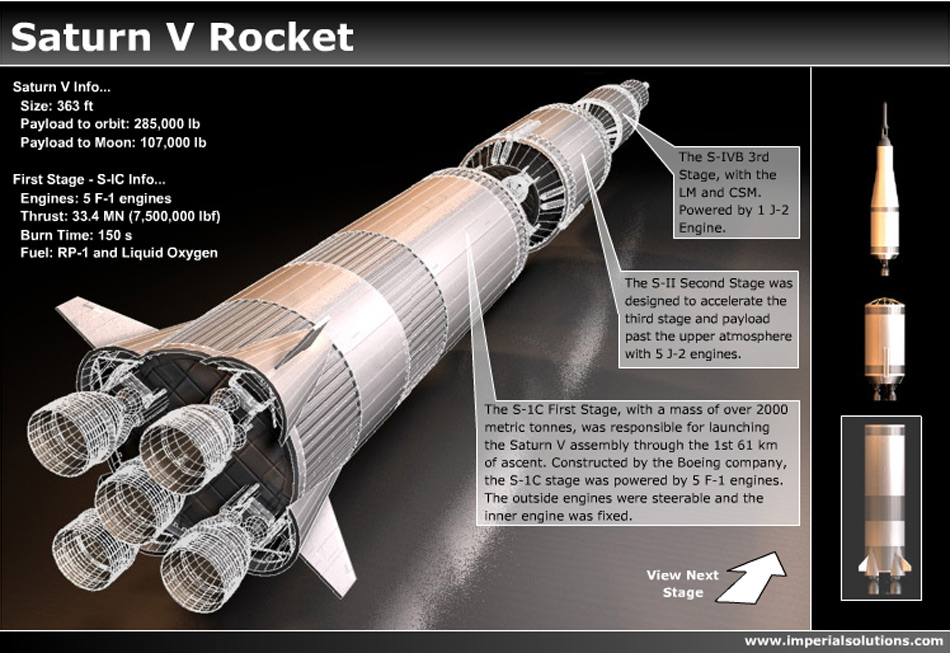
The Apollo Connection -- George had informed me that while he was a Chrysler employee he had worked on the design of the Saturn V rocket that was the backbone of the Apollo program.  One day we were talking about his contribution and I learned that he was responsible for the stress analysis on the fins that surround the bottom skirt of the Saturn V.  The kind of analysis used to calculate stress is referred to as "finite element analysis," and it typically involves hundreds or thousands of interrelated calculations.  Before the use of computers, it was a tedious repetitive arduous process.


The day after we first broached the subject, George asked me to come into his office.  There on the desk was a stack of three-ring binders about a foot tall.  "There are the stress calculations for one of the Saturn V fins," he informed me.  I looked at page after page of orderly calculations, all meticulously recorded in George's distinctive precise printing.  "I did every calculation and then it had to be verified by two other guys.  This represents about 18 month's work."  You couldn't help but appreciate what a monumental effort the Apollo program had been.

George passed on a few years later.  A lifelong avid fisherman, he was buried with his favorite rod, reel and tackle box.  I've often wondered whatever became of those precious notebooks that represented so much of a man's life.